
What is Leadership Style – and how can I assess it?
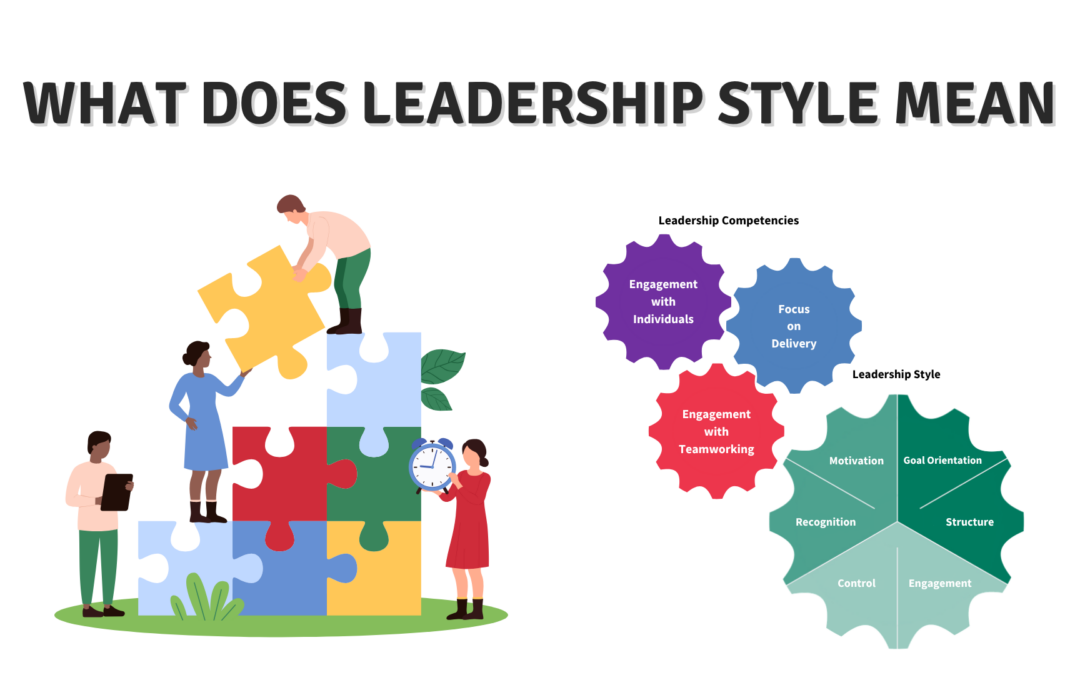
Leadership rests on three competencies (global factors) that help to optimise the relationship between a leader and their followers to produce better performance and better wellbeing. A major 2025 study (with the UK Institute of Leadership and Management) found these are:
- Having and demonstrating a sense of purpose
- Engaging with individuals to equip them with what they need to succeed
- Engaging with team working to create “one team”
Although these core behaviours underpin every approach to leadership, they can be applied in many different ways. This is what leadership style means. Practitioners will often find an adjective before the term leadership. This generally indicates a particular style of leadership.
Moreover, leadership style will be situational – it will adapt according to the prevailing circumstances. The most common influences here are:
- The maturity and capability of the followers
- The complexity of the task or challenge
- The speed at which a response to the challenge task is needed
A new employee participating in a complex task that needs to be delivered quickly is likely to be guided differently, in the short term, than would an experienced employee carrying out a routine task where there are no time pressures.
The same 2005 study identified six specific factors that are derived from the three global factors. These are shown below.

Interestingly, the study found that, for most people, the profile reflected an adopted style rather than their preferred style. It seems that people will conform to the prevailing culture
An important by-product of the study was the development of an Inventory, the Integrated Leadership Measure (ILM72), that assessed both the 3 global factors and the 6 leadership style factors. Exploring these factors explains how leadership impacts core team functions
Focusing on the Task v the Person
Person-oriented leaders prioritise satisfying their people’s needs, fostering trust, openness, and creating an environment where team members feel safe to express their thoughts and opinions.
On the contrary, task-focused leaders may inhibit employees from offering their views (reducing their feeling of autonomy and mastery), which could negatively impact psychological safety.
Being flexible v dogmatic
Flexible leaders are open to new ideas and involve others in decision-making, enhancing psychological safety by empowering people and building shared responsibility and trust.
In contrast, rigid leaders may stifle creativity and innovation, leading to employees avoiding voicing their ideas for fear of not being heard or being seen as a challenge to their authority.
Centralised v Decentralised
Leaders face a choice between placing themselves at the centre of all activity or delegating control to others.
A decentralised style may improve employee engagement and accountability, promoting an environment where team members feel they have autonomy and are able to express their opinions.
Centralisation can limit employees’ autonomy, leading to feelings of frustration and a lack of motivation to openly share ideas.
Reward or Punishment Oriented
Those who use praise-based approaches are inclined to recognise their employees’ efforts, fostering a work atmosphere where they feel more willing to take the initiative and share ideas.
In contrast, approaches based on achieving specific results, and where failure may result in negative consequences, are more likely to create an atmosphere of fear of failure, discouraging open expression of opinions and potentially a low level of psychological safety.
Focusing on The Means v The End
Outcome-oriented leaders may sacrifice much to achieve the result, which can sometimes lead to disregarding processes and procedures as well as employee contributions.
Process-oriented leaders place great emphasis on how the goal is achieved, adherence to standards and the well-being of followers.
Structured v Organic
Those who rely on a structured approach are likely to create an environment where processes are clearly defined and understood by all team members. This can foster a sense of security.
Those who rely on intuition often make decisions based on instinct and experience. They may respond in an agile manner to situations.
This can create uncertainty. If they explain their actions, this can be mitigated.
In summary
Analysing the leadership style scales in the ILM72 sheds light on their potential impact on core processes such as communications. Each scale influences different aspects of the environment. In a world where the situation influences leadership style, some behaviours associated with these leadership styles can threaten issues such as psychological safety or participation in problem solving.
As always, it is self-awareness that matters. The prudent leader seeks to optimise what they are doing
Those who consciously understand this can actively shape an organisational culture where all that employees bring to the team can be harnessed, resulting in performance and wellbeing being optimised.
(Many thanks to Wojtek Grad for his contribution to this article)

