
Leadership and Mental Toughness.
The role of resilience and positivity in leadership effectiveness
Leadership is a quality that has always been important, often misunderstood, and now, in the 21st Century, it has a renewed importance. It’s at the top of the development agenda for many.
The World Economic Forum global employer survey regularly identifies Leadership as o e of the ten most important skills in the 21st Century.
Leadership has to deal with complexity and change like never before. And it will get tougher still.
Firstly, we need to address what leadership is.
Understanding Leadership and Mental Toughness
Leadership has not always been clearly understood. In 2005, researchers Auger and Teece famously noted, “as a scientific concept, leadership is a mess”—reflecting how difficult it is to define leadership in chaotic modern organisations.
In 2005, research* supported by the UK Institute of Leadership and Management identified a generic definition that covered most models: “Leadership is… influencing, inspiring and directing the performance of people towards the achievement of key goals – and creating the sense of success in the short and long term”
The first part focuses on the individual. The second addresses culture. It is the key to enabling individuals, teams and organisations to be the best version of themselves.
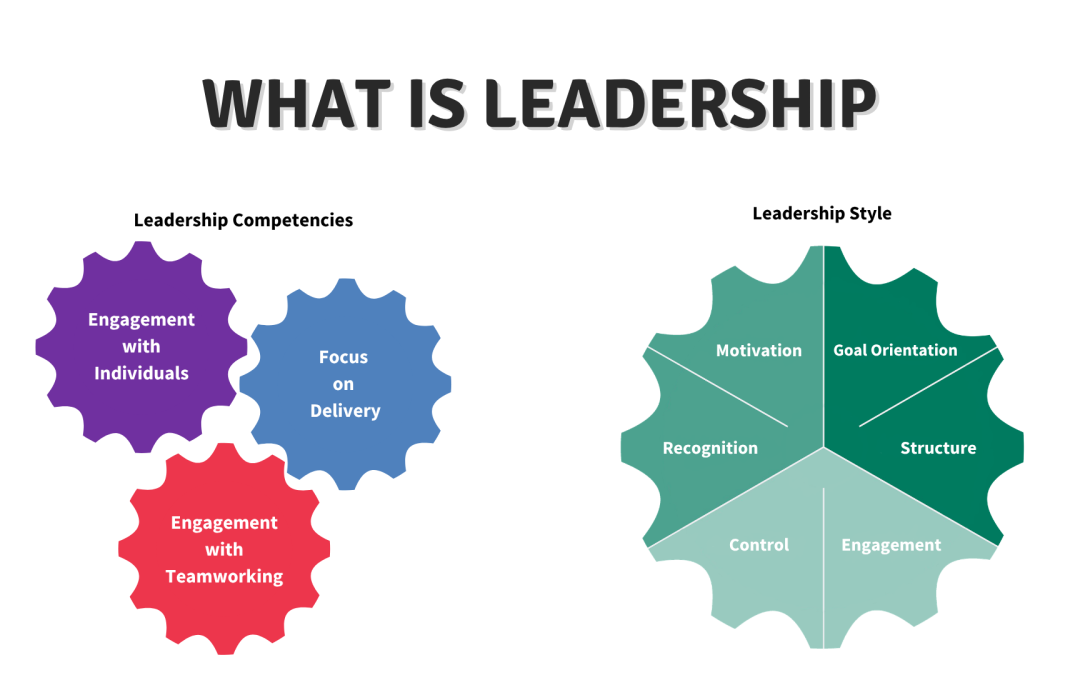
The study found that there are 3 competencies that were important for effective leadership.
- Determination to deliver – having purpose and commitment to achieve that purpose.
- Engagement with the individual – ensuring all are competent and have the autonomy and resources to be trusted to do their job.
- Engagement with teamworking – Creating a culture of collaboration to optimise activity.
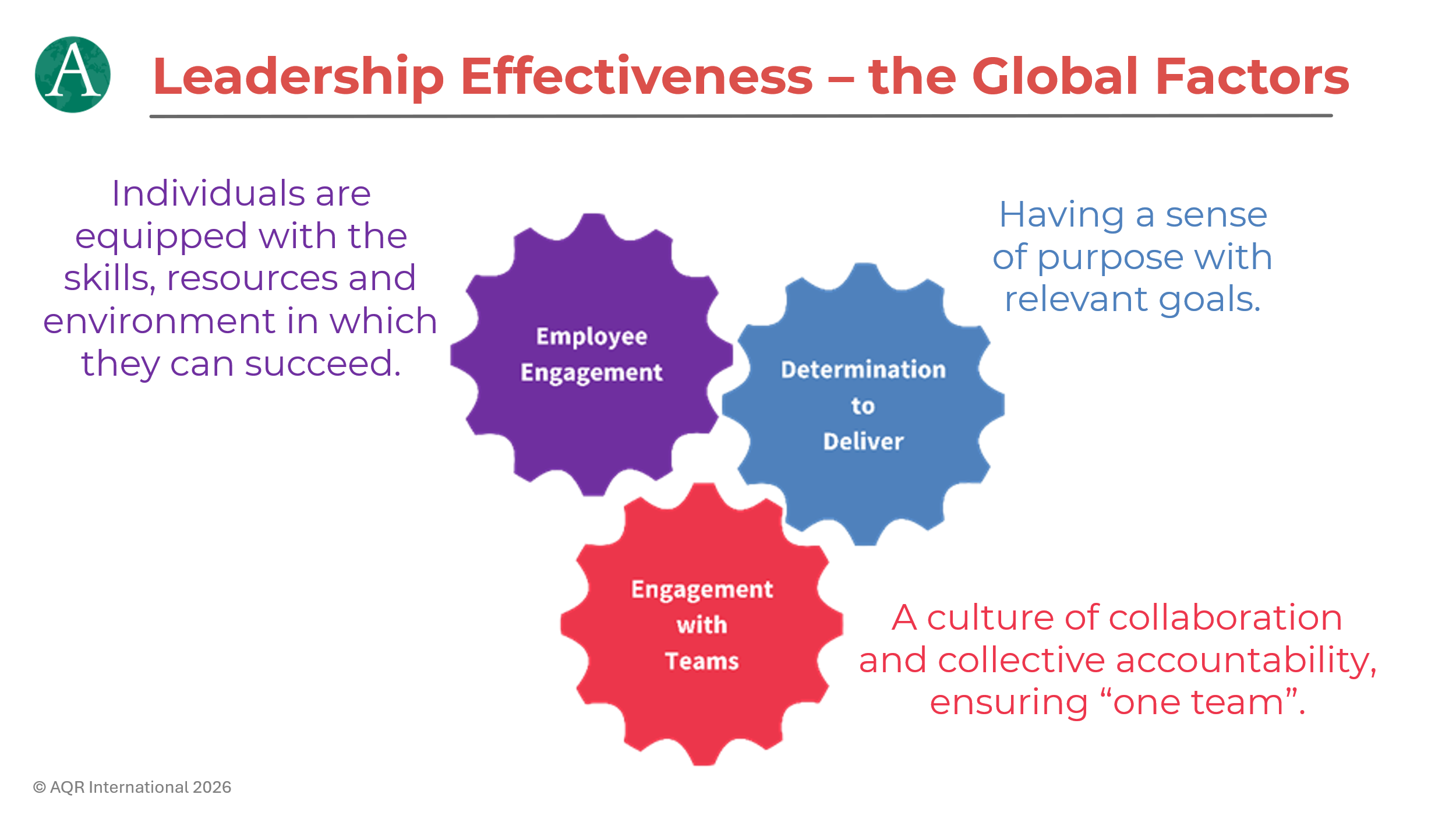
An important by-product of the research was to create a reliable measure of leadership effectiveness in terms of these three factors (and 6 aspects of leadership style discussed in the next article 2. Leadership Style in the series).
This is the ILM72 Measure
Does the well-evidenced mental toughness concept play a part in effective leadership?
Mental Toughness is a personality trait that describes an individual’s mental response to stressors, pressure, opportunity and challenge. Very well evidenced, it consists of 8 factors across 4 constructs. It explains why we behave the way we do. Briefly summarised below:
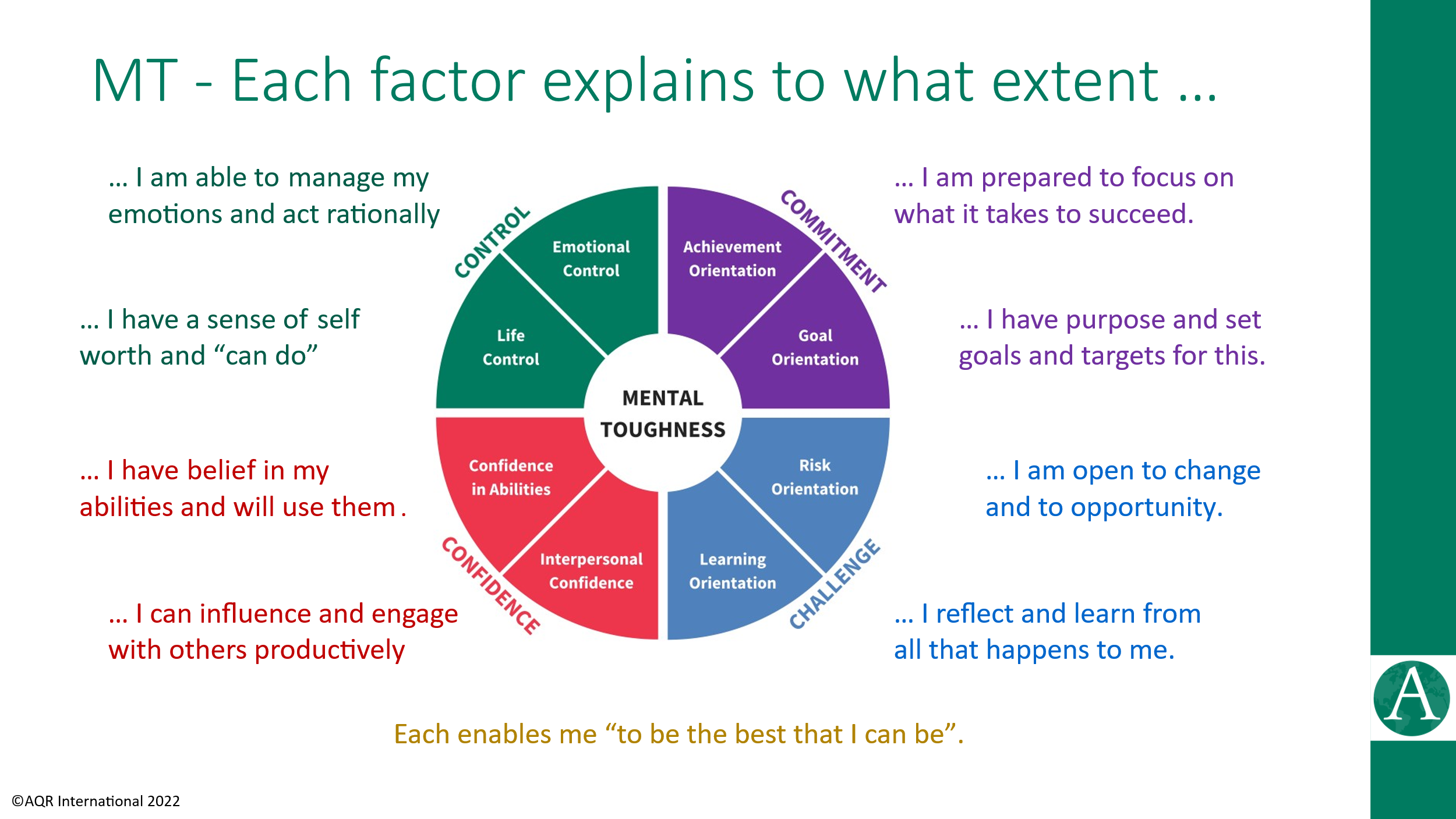
The concept describes a person’s default mental responses that significantly influence how they act when faced with events. The 3 global factors are clusters of behaviour. The mental toughness concept enables us to explain the extent to which a leader behaves optimally. And signposts where development can be directed.
Bringing this together
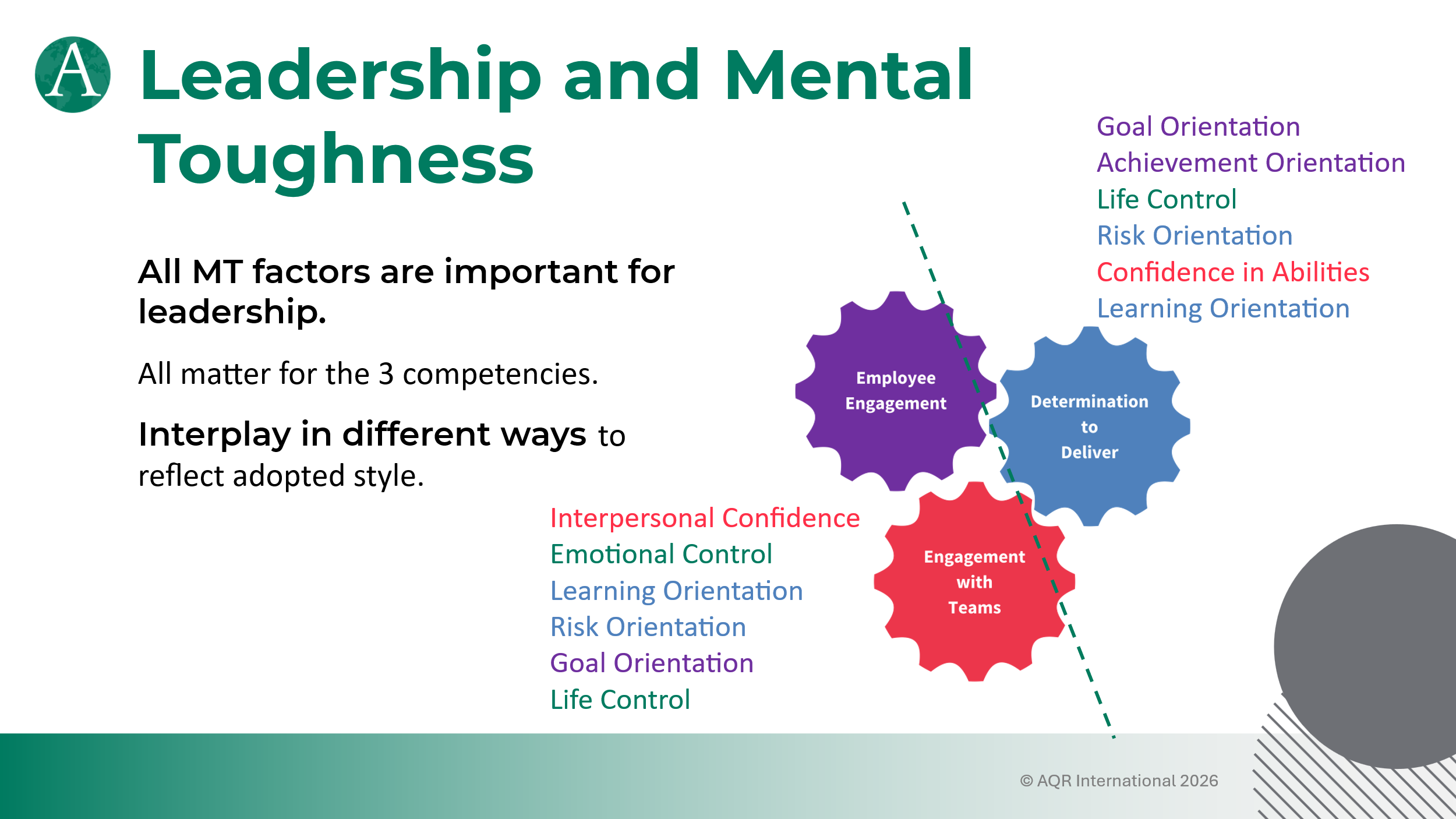
The MTQPlus is a high-quality psychometric which assess the 8 mental toughness factors. The underlying theme for MTQPlus and ILM72 is enabling people to be the “best that they can be”.
Mental Toughness and Leadership Effectiveness
If we start with Determination to Deliver, this brings together having a sense of purpose from which goals come, avoiding distractions and a self-belief that the purpose is achievable. Sharing this with others generally motivates those who follow the leader.
All 8 mental toughness factors are relevant here. Life Control and Confidence in Abilities support a self-belief in themselves and in their skill set. Emotional Control contributes to maintaining poise in difficult times. The Control factors are central to this competency.
Risk Orientation represents courage to accommodate new ideas, opportunities, etc and Learning Orientation supports a focus on solutions and continuous improvement. Finally, Interpersonal Confidence represents the mindset to engage comfortably with others.
Next, we look at Engagement with the individual. This competency addresses optimising the contribution that each individual can make by engaging with them as unique individuals and providing them with the autonomy to do their job without standing over them.
It also addresses mastery – the idea that people feel that they are adequately resourced to be able to achieve what is expected from them.
Again, Interpersonal Confidence matters to enable people to be confident in the support they get, as well as actively listening to them. Life Control and Confidence in Abilities) underpin the leader’s self-belief.
Trust requires a degree of Risk Orientation; getting it right in the long term requires Learning Orientation, and maintaining poise requires Emotional Control.
Finally, Engagement with teamworking. This adds to optimising what people can do. When people collaborate, they can perform more effectively. It can be a significant factor in wellbeing if teamworking is managed and led effectively.
This addresses the need to develop and support team working across all teams as well as within teams. The best leaders create a teamworking culture.
The mental toughness factors described for engagement with the individual apply equally here.
In summary
It is often said that it is not difficult to know what leaders should know and do. The challenge lies in application. This is not easy. People are complex, and each responds differently to the same stimulus. The situation is always complex and uncertain and can be ever-changing.
What matters, as always, is the attitude that leaders bring to their role to do the right things.

*Dr Nolliaig Heffernan, Professor Peter Clough and Doug Strycharczyk
