
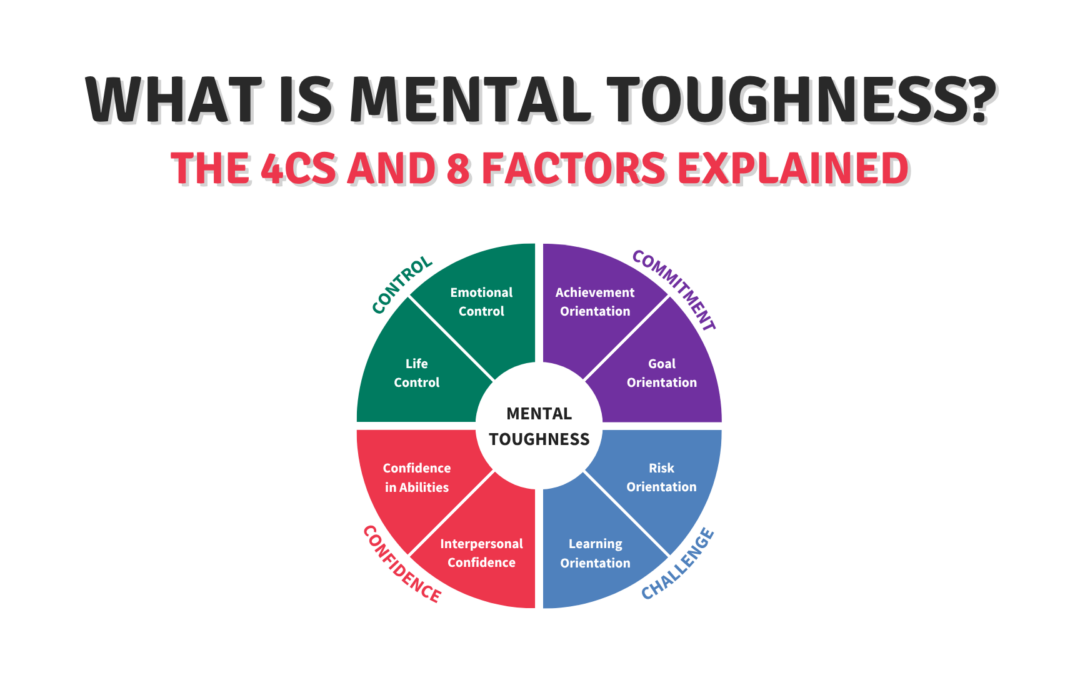
If you are asking, “What is mental toughness?”, it is a very well-evidenced personality trait which explains, in large part, how individuals respond mentally when exposed to stressors, pressure, opportunity and challenge, irrespective of the prevailing situation.
It helps users to understand “why they behave the way they do when events occur”. By defining mental toughness, we can better grasp the underlying psychological mindset that drives our actions.
What is Mental Toughness? The 4Cs Framework
Research has established that the concept consists of 4 constructs that each consist of 2 factors, eight in all. These describe aspects of a person’s default mental approach to an event, the instinctive thoughts that influence behaviour. These are:
Control
The extent to which a person feels in sufficient control of their life to have influence over their environment and make a difference. The factors are:
-
Life Control: The degree to which a person feels they are worthwhile and believe they can readily attempt most things even if these are new to them. Sometimes described as a “can do” approach.
-
Emotional Control: The extent to which a person feels able to regulate their emotions, manage their anxieties and keep emotions out of decisions and actions.
Commitment
The extent to which an individual understands their purpose and can avoid distraction, maintain focus to be able to persist with a goal or work task. The factors here are:
-
Goal Orientation: The degree to which a person is likely to visualise what success looks like, have a sense of purpose and set goals and targets for activities. More likely to prioritise, plan and organise what they do.
-
Achievement Orientation: The extent to which the individual is likely to visualise what success feels like and is inclined to “do what it takes” and gain satisfaction (and perhaps relief) from achievement.
Challenge
This describes the extent to which an individual is likely to view challenges, change & problems as opportunities, while others see them as threats and learn to accommodate these. The factors that contribute to Challenge are:
-
Risk Orientation: The degree to which the person sees opportunity where others of equal ability do not and is attracted to new ideas and new solutions to their situation and even chaos and change.
-
Learning Orientation: The extent to which the person reflects on what happens to them and around them, as well as how optimistic and solution-focused they are.
Confidence
This describes the individual’s self-belief in their capabilities to successfully complete tasks that may feel too difficult for individuals with similar abilities but lower confidence. The contributory factors are:
-
Confidence in Abilities: The extent to which the individual believes they possess the knowledge, skills and experience to deal with whatever they face.
-
Interpersonal Confidence: The extent to which the person engages comfortably with others to learn, to collaborate, to share, to ask others for help & support, as well as influence them.
(Note: They are often represented in the form of a pizza image)
Understanding the Mental Sensitivity Spectrum
When exploring what is mental toughness, there are two important points to remember.
First, research shows that the factors are relatively independent of each other. Each factor might indicate a specific piece of insight into the person. By virtue of independence, there are literally tens of thousands of possible combinations, each one introducing a valuable nuance to understanding the individual.
For instance, a high level of Achievement Orientation together with a low level of Confidence in Abilities might indicate a perfectionist.
The other point is that each scale represents mental toughness at one end and mental sensitivity at the other. These are not “strength” or “weakness”. Each point on every scale represents an advantage and disadvantage. Whether this is effective depends on the situation.
For instance, a lower, more mentally sensitive level of Life Control might, at first sight, suggest someone who hesitates for too long. This might be because they are carefully considering whether they can accomplish a task. In some settings this is a strength, in others less so.
The Mental Toughness concept, together with the MTQPlus psychometric, provides a coach with a remarkable level of diagnostic capability. Far more than indicated here.
It should be in every coach’s toolbox.
